Application
Water-Cooled Copper Power Components and Cables
Drawing-based water-cooled power components matched to electrical duty, conductor package, terminal interfaces, movement, coolant circuit, hose protection, and inspection.
Application Scope and Product Identity
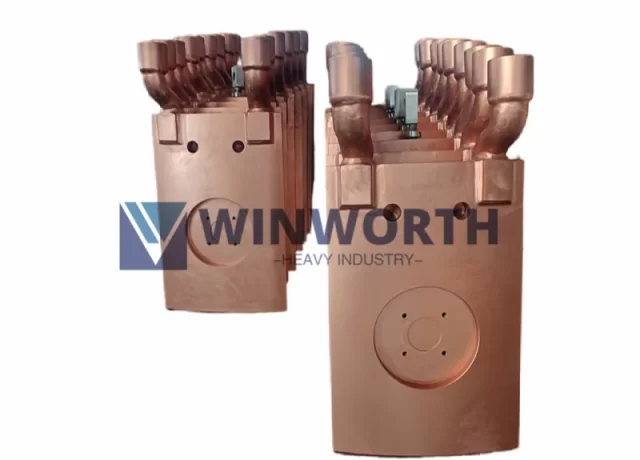
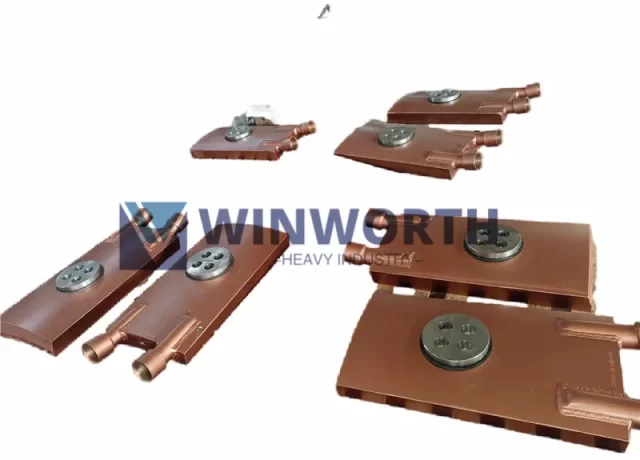
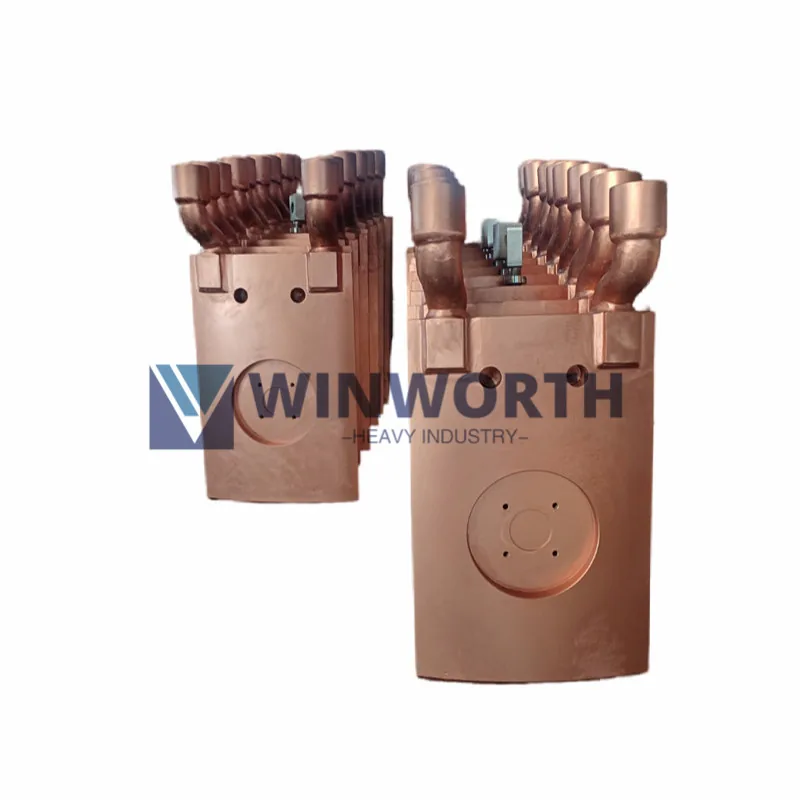
Winworth manufactures drawing-based water-cooled copper power components for confirmed industrial high-current positions. The existing product route covers flexible water-cooled power cables for EAF and SAF equipment. Buyer-defined cooled terminals, rigid conductors, bus tubes, connector blocks, or other assemblies require separate drawings and supply boundaries.
A flexible water-cooled cable accommodates equipment movement between fixed electrical interfaces. A rigid water-cooled busbar or tube carries current through a fixed geometry. A cooled terminal joins the conductor to mating equipment. Different functions require different conductor, terminal, hose, joint, support, insulation, and cooling designs.
Electrical, Movement, and Environmental Inputs
Provide furnace or equipment type, AC or DC arrangement, phase and cable configuration, rated and operating current supplied by the buyer, frequency and duty, cable length and conductor section, terminal orientation and hole pattern, fixed and moving interfaces, full movement envelope, bend and torsion, minimum permitted bend radius, electromagnetic interaction, supports, sag, clearance, vibration, radiant heat, sparks or splash, abrasion, dust, chemicals, and maintenance access.
For furnace cables, tilting, roof swing, electrode movement, installation routing, cable grouping, phase relationship, terminal rotation, heat shielding, anti-chafing protection, outer hose, clamps, and handling method should be documented. Do not copy a cable by overall length and terminal photograph alone.
Cooling Circuit and Safety Boundary
Provide coolant type and quality, supply and return circuit, inlet temperature, permitted outlet temperature or temperature rise, required flow and pressure supplied by the system designer, allowable pressure drop, fittings, hose nipples, seals, circuit separation, corrosion control, monitoring, low-flow or overtemperature interlocks, leakage detection, flushing, draining, and maintenance procedure.
Cooling-water design is part of the electrical safety boundary. Winworth supplies and tests the ordered component to the agreed procedure; the buyer remains responsible for plant water quality, pumps, heat exchangers, manifolds, hoses outside scope, instrumentation, monitoring, interlocks, grounding, isolation, commissioning, and operating protection.
Construction, Inspection, and RFQ
Define copper strand or conductor package, terminal material and condition, strand-to-terminal joining method, internal core or flow path, outer hose, protective sleeve, clamps, seals, cooling connections, insulation, marking, and assembly details. Any change to joining heat input, strand arrangement, hose construction, terminal geometry, or coolant path requires electrical, thermal, mechanical, and flexibility review.
Inspection may include material and conductivity records, dimensions, terminal geometry and hole pattern, conductor section or mass check, joining inspection, specified NDT, coolant-passage continuity, pressure or leakage testing to an agreed procedure, flow or pressure-drop checks when specified, resistance measurement under an agreed method, insulation and hose checks, bend or movement verification, marking, and documentation.
Provide equipment and circuit drawings, current and frequency data, cable arrangement, movement envelope, length and section, terminal drawings, conductor and joining requirements, cooling map and water data, hose and protection, insulation, supports, environmental exposure, tolerances, tests, quantity, records, packaging, handling, and destination.
No ampacity, resistance, power loss, coolant flow, temperature rise, pressure rating, bend life, electrical efficiency, furnace performance, or service life is promised without validated design inputs and an agreed acceptance method.