Industry
Custom Components for Electromechanical Equipment
Custom components for electromechanical equipment, matched to machine position, function, material, load, motion, fit, interfaces, tolerances, wear, and inspection.
Industry Scope
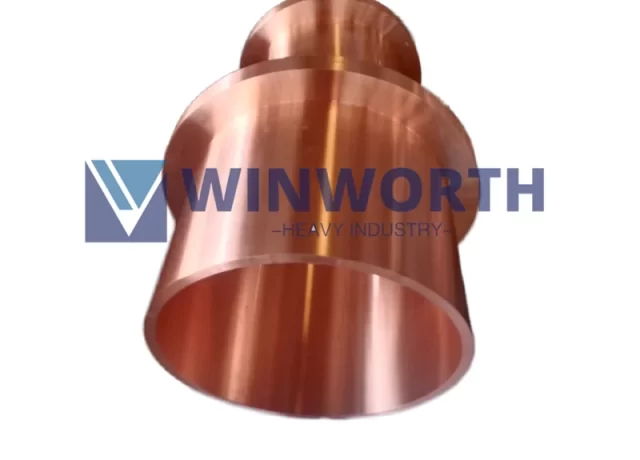
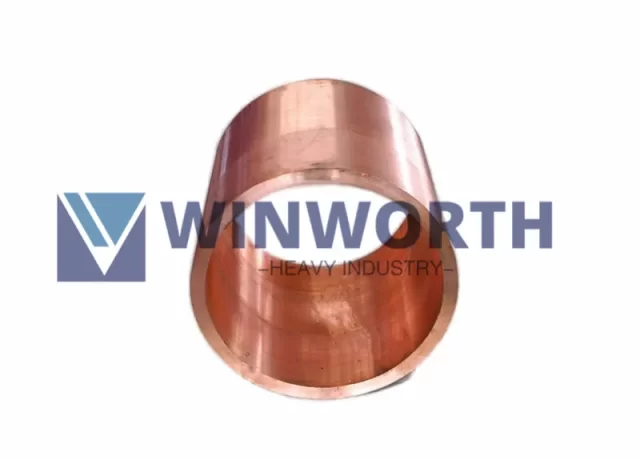
Winworth manufactures drawing-based copper alloy and custom machined components for selected positions in electromechanical and general mechanical equipment. Typical inquiries include bushings, sleeves, rings, spacers, liners, plates, blocks, flanges, adapters, contact or heat-transfer components, and other buyer-defined replacement parts.
The page routes each inquiry by equipment position and component function. General Mechanical Equipment covers a broad range of drawing-controlled replacement and custom parts. Bushings / Sleeves / Custom Machined Parts covers confirmed sliding-bearing, guiding, wear-sleeve, spacer, liner, and related cylindrical or flanged parts.
Component Function and Equipment Boundary
Identify the machine, assembly, component position, and function before selecting material or manufacturing route. State whether the part supports a shaft, guides motion, carries load, transmits torque, locates another component, provides a wear surface, conducts current or heat, seals or shields an interface, or only acts as a spacer.
Winworth's component scope does not include a complete motor, generator, gearbox, pump, actuator, drive, control system, bearing system, lubrication system, shaft train, guarding, or machine validation unless separately defined in the purchase order. The equipment owner remains responsible for system design, ratings, alignment, lubrication, monitoring, protection, installation, commissioning, and operating limits.
Operating and Interface Inputs
Provide load magnitude and direction, static or dynamic duty, speed, rotation or oscillation, stroke, start-stop frequency, shock, vibration, misalignment, temperature, thermal cycling, electrical or thermal duty where applicable, lubricant, contamination, corrosion, mating materials, shaft and housing conditions, installation method, and expected maintenance practice.
Map all functional interfaces: shaft, housing, shoulder, key, pin, fastener, seal, lubrication feed, cooling feature, electrical contact, insulation boundary, adjacent component, assembly clearance, and removal access. A component that looks like a sleeve may function as a plain bearing, wear liner, spacer, insulating carrier, or conductive interface; the drawing and assembly role control its identity.
Engineering, Manufacturing, and Inspection
Provide part and assembly drawings with revisions, material standard and designation, condition, manufacturing route where controlled, dimensions and datums, fits, geometric tolerances, surface finish, grooves, holes, threads, flanges, split lines, joining, coatings, marking, inspection plan, certificate scope, quantity, packaging, destination, and requested schedule.
The approved manufacturing route may use cast, forged, extruded, rolled, or other specified stock followed by heat treatment, rough machining, finish machining, drilling, grinding, joining, coating, or assembly as required by the drawing. Inspection may include material records, dimensions and datums, fit features, concentricity, runout, wall thickness, surface finish, hardness or other properties when ordered, specified NDT, trial fit, marking, and document review.
No machine rating, load capacity, torque, efficiency, temperature rise, vibration level, noise level, wear rate, maintenance interval, or service life is guaranteed by supplying an individual component.