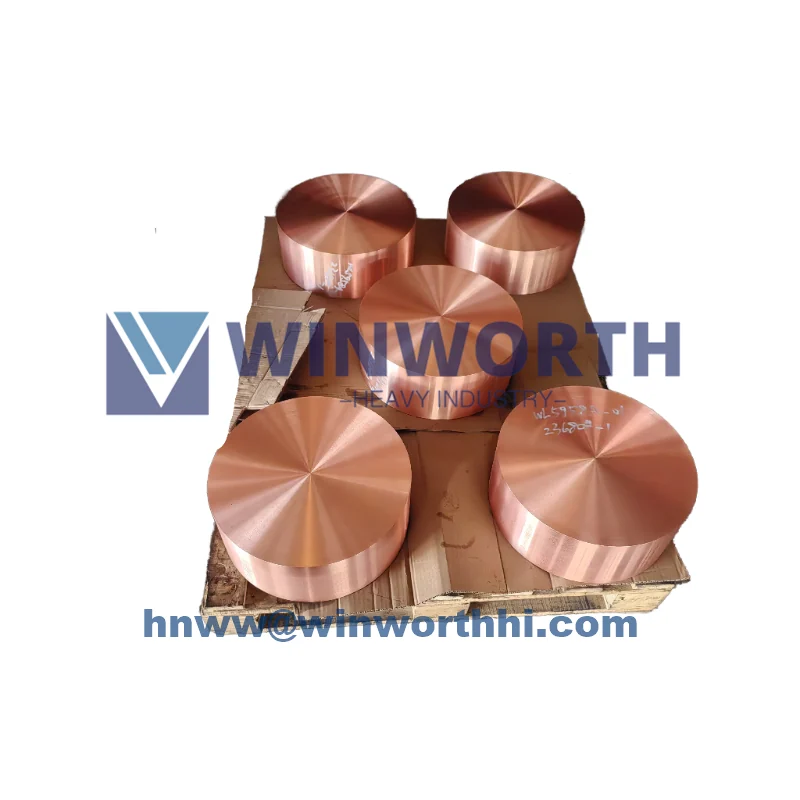
Application
Copper Contact Parts for Welding Machines
Drawing-based welding-machine contact parts matched to equipment, current path, contact geometry, pressure, movement, material, cooling, interfaces, and inspection.
Application Scope and Product Identity
Winworth manufactures drawing-based copper contact pads, CuCrZr rings, electrodes, holders, adapters, terminals, and selected conductive wear parts for confirmed welding-machine positions. The application page is a routing layer; product identity remains controlled by function and drawing.
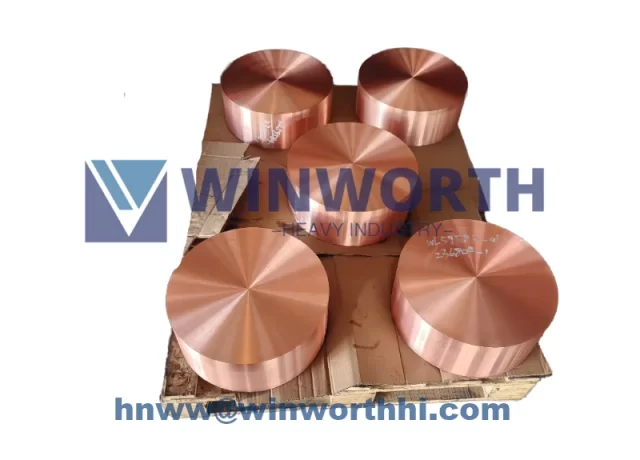
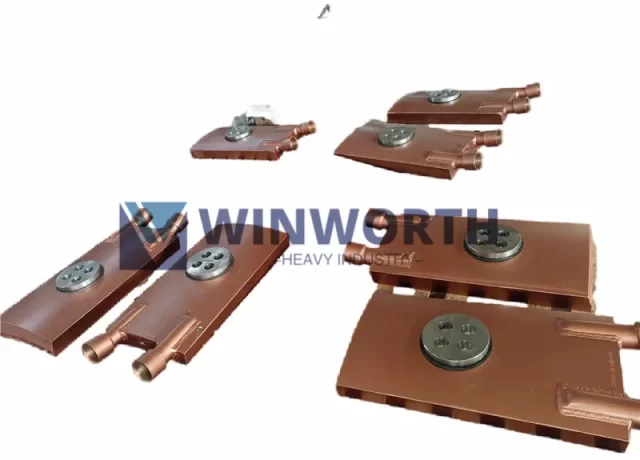
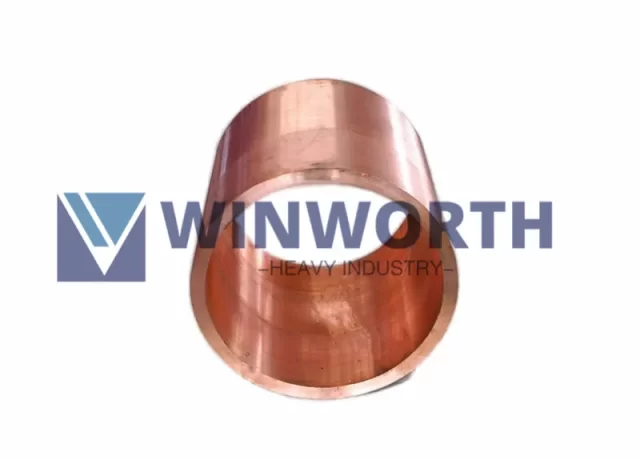
The existing Copper Contact Pad for Welding Machine page covers a flat, block, plate, or drawing-defined pad interface. The existing CuCrZr Copper Ring page covers an annular contact or electrode component. Ring outside diameter, inside diameter, section, split or solid construction, runout, mounting, and movement cannot be inferred from a contact-pad drawing.
EAF electrode clamps and SAF contact shoes are excluded. A furnace electrode is not the same as a resistance-welding electrode, and a furnace contact component does not automatically match welding-machine current, force, cooling, motion, or mounting.
Contact Face, Mounting, and Current Path
Map the current path through terminals, holders, adapters, pads, rings, electrodes, tooling, workpieces, and return conductors. Identify which component applies force to the work, which only carries current, which moves or rotates, which is dressed, and which is fixed.
Provide contact-face profile and area, mating material, pressure or force input supplied by the buyer, surface finish, plating, flatness, parallelism, runout, taper, threads, holes, slots, keys, shoulders, retention, supports, alignment, movement, rotation speed where applicable, vibration, thermal expansion, cooling, insulation, splash, contamination, and maintenance access.
Contact resistance and heat generation belong to the assembled interface. Material conductivity alone does not control performance; geometry, face condition, pressure distribution, alignment, oxidation, contamination, cooling, duty, and assembly method also matter.
Material, Manufacturing, Inspection, and RFQ
State the material standard and designation, ISO or AWS/RWMA class when specified, condition, conductivity, hardness, strength, softening or temperature requirement, and certificate scope. Do not assign CuCrZr, pure copper, tungsten-copper, dispersion-strengthened copper, or another material without the approved specification.
Manufacturing may include forged, rolled, cast, machined, drilled, turned, ground, formed, joined, heat-treated, plated, coated, or assembled construction as required by the drawing. Inspection may include material and property records, dimensions, datums, profile, flatness, concentricity, runout, taper, hole and thread checks, contact finish, passage and leakage tests, specified NDT, fit or trial assembly, marking, and documentation.
Provide machine and process, part and assembly drawings, product identity, current and force inputs, material and condition, contact and mounting geometry, movement, cooling, insulation, dressing and wear limits, tolerances, tests, quantity, records, packaging, and destination.
No interchangeability, current capacity, contact resistance, temperature rise, weld quality, wear rate, dressing interval, replacement interval, or service life is inferred from appearance or product name.