Application
Copper Components for Resistance Welding Equipment
Custom copper parts for spot, seam, projection, and other confirmed resistance-welding equipment, matched to electrode role, geometry, material, mounting, cooling, and inspection.
Process and Equipment Scope
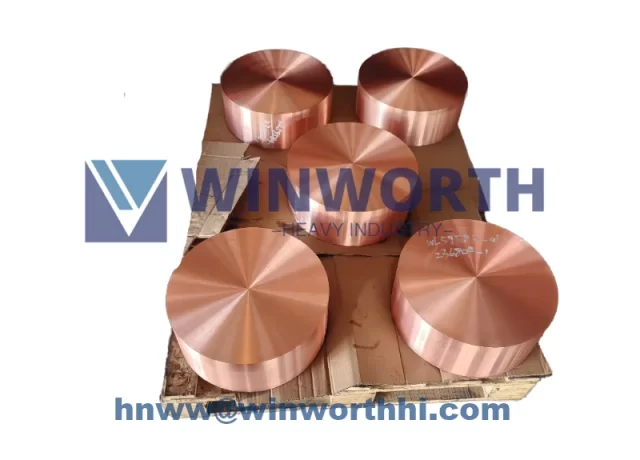
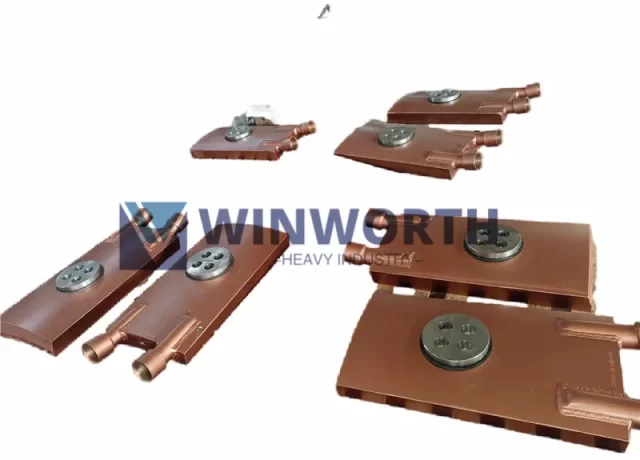
Winworth manufactures drawing-based copper and copper-alloy components for selected current-carrying and force-transmitting positions in resistance-welding equipment. The page provides process context for an ordered electrode, cap, tip, holder, adapter, contact pad, ring, wheel blank, platen insert, terminal, or custom tooling component.
Resistance spot welding applies current and force through opposed electrodes to a localized joint. Seam welding uses rotating wheel electrodes or related rolling contacts. Projection welding concentrates heating and force at workpiece projections and may use broad flat tooling. Flash/butt and other resistance processes use different clamps, dies, current paths, movement, and upset sequences. Confirm the actual process before selecting geometry or material.
Component Versus Machine Responsibility
Winworth's component scope does not include the welding transformer, secondary electrical circuit as a complete system, weld controller, current monitor, force actuator, pneumatic or hydraulic circuit, cooling unit, fixtures, robot, guarding, line controls, safety validation, weld schedule, process qualification, or production acceptance unless explicitly ordered.
Machine and process owners remain responsible for current, weld time, force, squeeze and hold sequence, workpiece preparation, alignment, cooling, electrode dressing, maintenance, monitoring, interlocks, guarding, and weld-quality acceptance.
Electrode, Material, and Interface Inputs
Provide spot, seam, projection, flash/butt, or other process; workpiece materials, coatings, thicknesses, joint geometry, projection or nugget requirements supplied by the buyer; current, time, force, duty and frequency inputs; electrode arrangement; face profile; holder, taper, thread, shank, cap, wheel or platen interface; movement; cooling; dressing; and replacement method.
ISO 5182 or AWS J1.3/RWMA material classes apply only when cited by the purchase specification. ISO 5821 female caps, ISO 1089 taper fits, or another dimensional standard apply only to the matching electrode architecture. A standard reference does not authorize substituting another cap, taper, holder, wheel, ring, or special electrode.
Inspection may include material and property records, dimensions and datums, electrode face and nose profile, cap or taper fit, concentricity, runout, wheel section, holes and threads, passage mapping, pressure or leakage testing, surface condition, specified NDT, trial fit or assembly, marking, and documentation.
RFQ Information
Provide machine maker and model, resistance-welding process, workpiece and joint data, approved weld-schedule inputs, assembly and part drawings, applicable standards, electrode or tooling role, material and condition, geometry, mounting, force path, movement, cooling, dressing and wear limits, tolerances, inspection and tests, quantity, records, packaging, and destination.
No weldability decision, weld schedule, nugget size, joint strength, process capability, machine rating, production rate, electrode life, or maintenance interval is guaranteed by supplying the copper component.