Application
Custom Copper Busbars and Electrical Cabinet Components
Custom busbars and conductive cabinet components manufactured to confirmed copper grade, geometry, hole pattern, bends, joints, supports, coating, and inspection plan.
Application Scope and Assembly Boundary
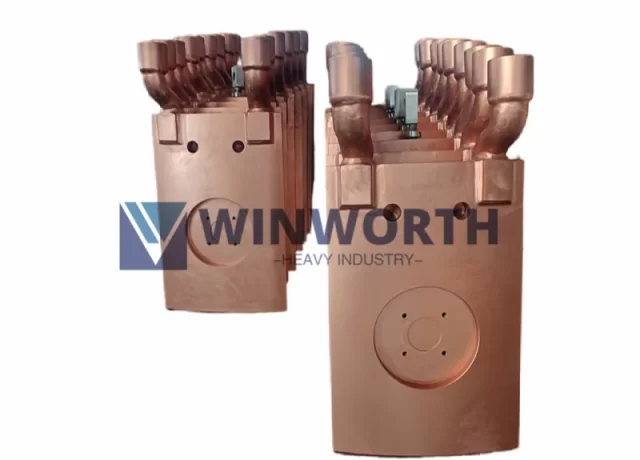
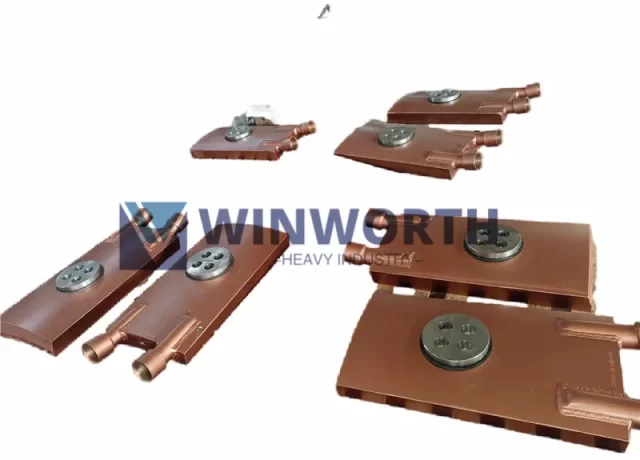
Winworth manufactures drawing-based copper busbars, conductive plates, terminals, connector links, and machined cabinet conductors. The ordered scope is the specified conductor or component, not a complete switchboard, switchgear lineup, busbar trunking system, electrical cabinet, protection system, or certified assembly.
If IEC 61439 or another assembly standard applies, the buyer or assembly designer must identify the relevant part, service conditions, rated characteristics, design verification, routine verification, and component requirements. A copper part does not independently establish conformity of the complete assembly.
Rating, Layout, and Joint Inputs
Provide AC or DC system, rated and operating voltage and current, frequency, phase and neutral arrangement, group loading, duty, prospective short-circuit current, required peak or short-time withstand data supplied by the assembly designer, permissible temperature rise, ambient, altitude, enclosure, ventilation, adjacent heat sources, conductor orientation, number of parallel bars, spacing, supports, phase distance, clearances, creepage, insulation, earthing, and protection boundaries.
Busbar ampacity depends on material conductivity, section, frequency and skin effect, orientation, number and spacing of bars, surface condition and emissivity, ambient, enclosure, ventilation, joints, nearby heat, and permitted temperature rise. A general ampacity table or cross-section cannot replace verification for the actual assembly.
Joint design should define overlap, contact area, hole pattern, edge distance, slot direction, thermal expansion, flexible links where required, fasteners, washers, torque or tightening procedure, plating, surface preparation, supports, bracing, and assembly sequence. Winworth does not select short-circuit bracing, protection devices, clearances, or cabinet architecture without an approved design.
Material, Geometry, Surface, and Inspection
State the copper grade and governing product form, condition or temper, conductivity and mechanical requirements, thickness and width, flatness or straightness, bend radius and orientation, grain or rolling direction where relevant, machined features, holes and slots, edge condition, burr limits, contact-face finish, plating or coating, insulation, marking, and packaging protection.
Inspection may include material and conductivity records, dimensions, flatness, straightness, section, bend angle and radius, hole and slot location, contact-face finish, burr and edge condition, plating thickness or adhesion when specified, insulation coverage within scope, fit or template checks, trial assembly, marking, and documentation.
No ampacity, temperature rise, short-circuit withstand, dielectric strength, IP rating, arc classification, EMC performance, assembly compliance, or service life is claimed for a busbar component alone.
RFQ Information
Provide single-line and assembly drawings, applicable assembly standard, system ratings supplied by the designer, conductor arrangement, part drawings and revisions, material and condition, geometry, bends and holes, joints, supports and bracing interfaces, insulation and clearances, plating or coating, fasteners and assembly procedure, tolerances, inspection and tests, quantity, records, packaging, and destination.