Application
Copper Components for Submerged Arc Furnaces
Custom copper components for submerged arc furnaces, matched to AC or DC arrangement, electrode column, contact pressure, high-current path, cooling, mounting, and inspection.
Application Scope and Furnace Arrangement
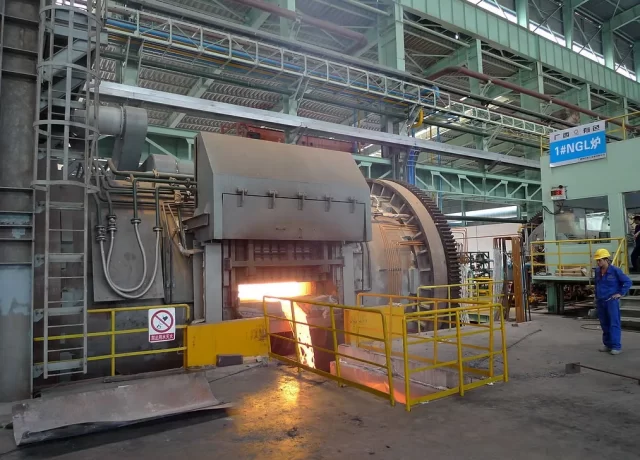
Winworth manufactures drawing-based copper and copper-alloy components for submerged arc furnace (SAF) equipment used in ferroalloy, slag-treatment, non-ferrous, and other buyer-defined electric-smelting duties. The page does not assign one alloy, feed, furnace roof, electrode number, electrode type, or power arrangement to every SAF.
AC furnaces may use three, six, or another project-defined electrode arrangement. DC furnaces use a different electrical circuit and may use a graphite electrode with a furnace-bottom return path. Söderberg, graphite, carbon, compound, or other electrode systems have different column, slipping, clamping, contact, cooling, and maintenance requirements. Confirm the actual furnace before selecting a component.
High-Current Path and Component Identity
The buyer's single-line diagram and electrode-column drawing should identify the current path from transformer and secondary conductors through fixed or flexible connections, bus tubes, contact shoes, electrode, and return path. State which connections, cables, tubes, terminals, clamps, insulation, cooling, and supports are included.
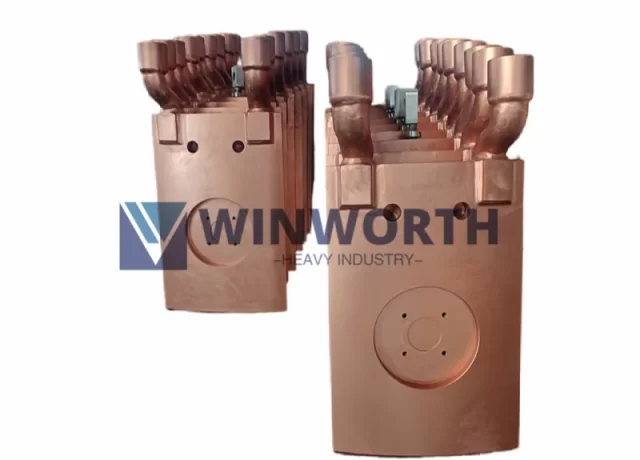
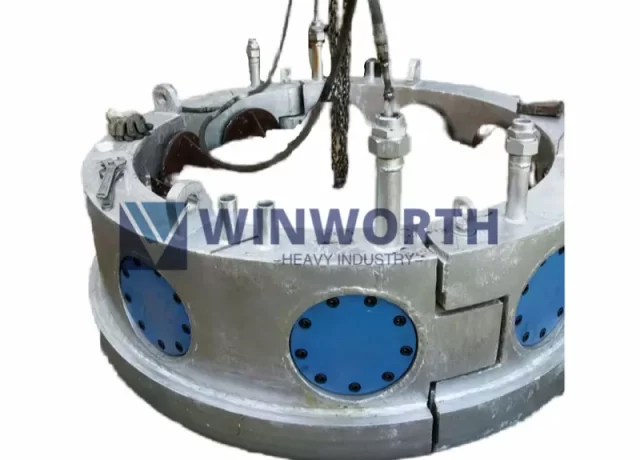
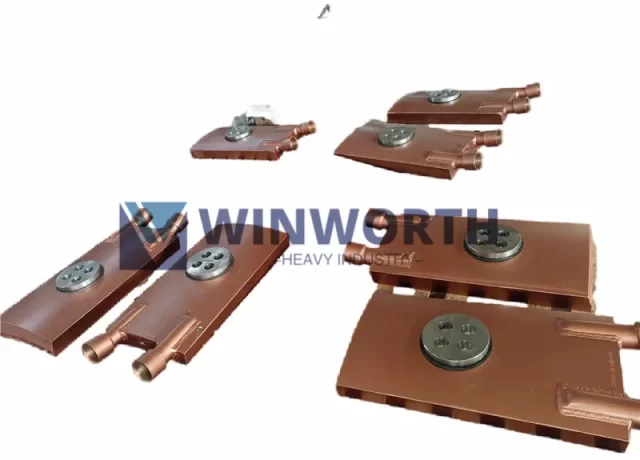
Contact shoes form the replaceable conductive interface around the electrode. The pressure ring is the surrounding structural or pressure-transfer component that applies the specified action to the shoe assembly, often through bellows or another mechanism. A water-cooled power cable is a flexible high-current connection between equipment interfaces. Similar copper appearance does not make these parts interchangeable.
Keep EAF electrode clamps and holders outside the SAF contact-shoe route unless the buyer's drawing proves the same product role. Welding-machine contact pads and CuCrZr welding rings are unrelated to the furnace electrode column.
Electrical, Mechanical, Cooling, and Inspection Inputs
Provide AC or DC arrangement, electrode number and type, current and voltage data supplied by the buyer, duty cycle, connection sequence, contact-face profile and area, shoe segmentation, pressure mechanism, ring geometry, bolt and hole pattern, movement and slipping envelope, thermal exposure, insulation clearances, support and alignment datums, cooling circuits, pipes, joints, monitored points, maintenance access, and replacement sequence.
Material grade and condition, forged, rolled, cast, machined, drilled, formed, fabricated, welded, brazed, or assembled construction, joining qualification, heat treatment, surface finish, contact preparation, cleaning, and documentation follow the approved drawing.
Inspection may include material records, contact profile, segment match, dimensions, concentricity, runout, holes and datums, passage mapping, joints and closures, NDT, pressure or leakage testing, circuit separation, conductivity or hardness when ordered, insulation and fit checks, trial assembly, and documentation.
No furnace power, current-carrying capacity, electrical loss, electrode consumption, slipping performance, metal recovery, throughput, availability, campaign life, or service life is promised without validated system data and an agreed acceptance method.
RFQ Information
Provide furnace type, process and maker, AC or DC diagram, electrode-column and component drawings, exact supply boundary, material and condition, buyer-supplied electrical inputs, contact and pressure arrangement, cooling map, insulation and mechanical interfaces, tolerances, NDT and tests, quantity, documents, packaging, lifting, and destination.