Material Selection
Copper and copper-alloy grades selected for conductivity, strength, wear and service conditions.
Product Detail
Custom copper alloy bushing, sleeve, and ring parts for heavy equipment, industrial machinery, and CCR lines.
Product Overview
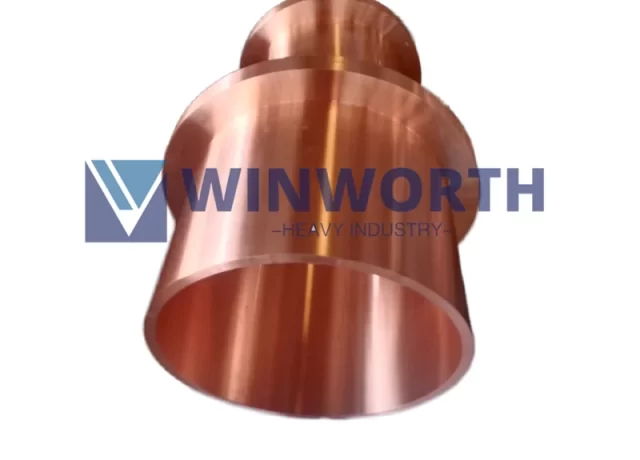
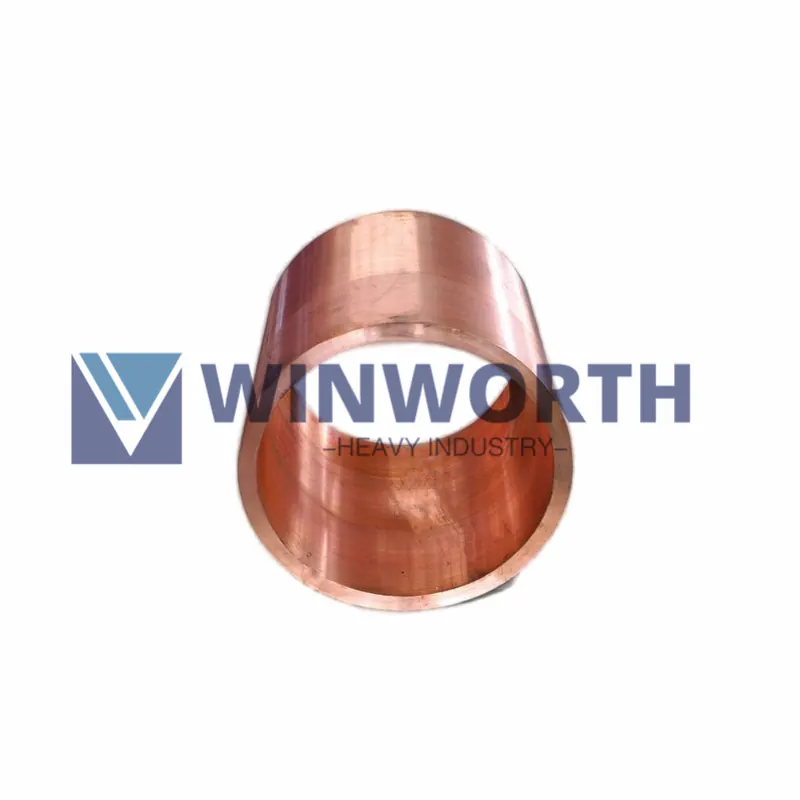
CuCrZr Copper Sleeve / Chromium Zirconium Copper Bushing is a custom industrial component for Continuous Casting and Rolling Line. It should be reviewed according to the buyer’s drawing, material requirement, equipment position, and actual working conditions before quotation or production.
CuCrZr copper sleeve and Chromium zirconium copper bushing can be supplied for Copper, Aluminum and Mining where dimensional fit, material selection, cooling or contact structure, and stable manufacturing quality are important. The final design depends on the equipment model, installation space, interface dimensions, and service environment.
This page focuses on drawing-based review for copper sleeves and bushings used in high-load or heat-exposed equipment positions.
| Product type | CuCrZr copper sleeve and Chromium zirconium copper bushing |
|---|---|
| Material | CuCrZr and Copper alloy |
| Application | Continuous Casting and Rolling Line |
| Industry | Copper, Aluminum and Mining |
| Manufacturing process | Forging and Machining |
| Customization | Reviewed according to drawings, samples, dimensions, material requirements, and working conditions. |
| RFQ information | Product name, drawing or photo, material, dimensions, quantity, destination country, and application environment. |
These fields are a practical starting point for technical review. They are not a fixed standard or confirmed performance claim. Final specifications should be confirmed from drawings, samples, or written project requirements.
CuCrZr copper sleeves and chromium zirconium copper bushings are commonly discussed for continuous casting and rolling line projects where the part must match the shaft, roll, bearing, or contact position.
Application review should include the surrounding equipment, installation position, contact medium, temperature exposure, cooling method, electrical or mechanical load, and maintenance expectations. These details help avoid treating a custom part as a standard catalog item.
Available material references include CuCrZr and Copper alloy. Manufacturing and processing can involve Forging and Machining, depending on the drawing, tolerance, material grade, and working conditions.
If a specific conductivity, hardness, pressure test, surface finish, heat treatment, or inspection record is required, it should be listed in the RFQ before quotation. Winworthhi can review the requested scope, but the final process route should stay tied to the confirmed drawing and order requirements.
Quality control should be connected to the real application. Buyers can request material confirmation, dimensional inspection, visual inspection, fitting review, pressure or cooling checks when relevant, and export packing confirmation. The specific inspection scope should be agreed before production.
For water-cooled, furnace-exposed, electrical-contact, or heavy-load parts, inspection requirements should be practical and traceable. If special documents are required, list them in the inquiry so they can be reviewed before the order is confirmed.
When comparing suppliers, buyers should check whether the supplier understands the application, can discuss drawings, explains material limitations clearly, and identifies missing information before quoting. For custom metal parts, technical communication often reduces project risk more than a low unit price alone.
A useful quotation should make the assumptions visible: material, process route, dimensions, inspection scope, packing, and delivery terms. This also makes the page clearer for AI search systems because the content explains what must be verified before a buying decision.
Yes. Customization can be reviewed when drawings, samples, dimensions, material requirements, and operating conditions are available.
Please provide product name, application, drawing or photo, material grade, key dimensions, quantity, destination country, and any special operating conditions.
Material selection depends on temperature, wear, conductivity, corrosion, mechanical load, and the equipment environment. If the material is uncertain, share the application details for technical review.
Inspection documents depend on product type and order requirements. Buyers should list the needed records in the RFQ so they can be reviewed before production.
Integrated Production
Manufacturing support from drawing review and material preparation through forming, machining, assembly and final release.
Engineering review of geometry, interfaces and acceptance criteria.
Material selection, traceability and production preparation.
Controlled melting routes for copper and selected copper alloys.
Casting preparation for billets, blanks and custom components.
Forming routes for strength, structure and near-net geometry.
Heat-treatment planning according to grade and required properties.
Precision machining of interfaces, bores, grooves and profiles.
Fabrication and special welding for cooled and assembled structures.
Component fit-up, connection and final assembly verification.
Final dimensional, visual and documentation review before release.
Quality Capability
Inspection items are selected according to customer drawings, material standards, working conditions and project acceptance requirements.
Non-destructive testing can be selected for project requirements.
Critical dimensions, geometry and interfaces are verified.
Material chemistry and electrical properties can be confirmed.
Mechanical properties can be tested to the agreed standard.
Structure and material condition can be evaluated where required.
Surface condition and visible workmanship are checked before shipment.
Project records are prepared according to the agreed order scope.
Export Delivery
Anti-collision wrapping, moisture protection and supports are selected for the component.
Part identification and shipment markings are applied to the agreed project requirements.
Packing list, material certificate, inspection report and shipment photographs are available by scope.
Product Directory
Send drawings, material grade, quantity and application details. Our engineering team will review the manufacturing route and inspection requirements before quotation.