
CuCrZr Is a Material System, Not One Universal Property Set
CuCrZr describes precipitation-hardenable copper-chromium-zirconium alloys used where a component needs a combination of electrical or thermal conductivity, strength, hardness, dimensional stability, and resistance to softening. The final result depends on the exact designation, chemistry, product form, section, manufacturing history, temper or condition, heat treatment, joining, and testing.
Do not treat all CuCrZr specifications as interchangeable. State the governing national, international, buyer, or project specification and the required product form.
Conductivity and Strength Must Be Balanced
Alloying and strengthening can improve mechanical capability but generally change conductivity relative to commercially pure copper. Copper Development Association guidance treats conductivity as one selection variable that must be balanced with strength, corrosion resistance, formability, temperature, and other service requirements.
For a finished component, define:
- Electrical or thermal function, current, duty cycle, contact area, joint condition, cooling, and allowable temperature.
- Mechanical load, contact force, wear, sliding or clamping duty, vibration, thermal cycling, and dimensional stability.
- Required conductivity, strength, yield behavior, hardness, elongation, or other acceptance values only where design and specification support them.
- Test method, temperature, location, orientation, sample type, and acceptance basis.
Product Form and Temper Matter
Copper alloy databases list CuCrZr/C18150 data by specific product forms and tempers. A typical property shown for one rod, plate, strip, or heat-treated condition is not automatically the value for a large forging, casting, welded assembly, machined component, or differently treated section.
Specify:
- Bar, plate, forging, billet, ring, tube, strip, casting, or another approved form.
- Starting and final temper or condition.
- Section size and property-critical locations.
- Forming, forging, rolling, extrusion, machining, welding, brazing, and heat-treatment sequence.
- Sampling and traceability between test evidence and delivered components.
Heat Treatment Controls the Property Balance
A CuCrZr route may include solution treatment, rapid cooling or quenching, cold or hot work where applicable, and aging. Exact temperatures, times, transfer limits, cooling practice, and aging parameters depend on the alloy standard, product form, section, starting condition, process sequence, and target properties.
An alloy certificate confirming chemistry does not by itself prove the final temper, conductivity, hardness, strength, dimensional stability, weld condition, or service performance.
Application Review
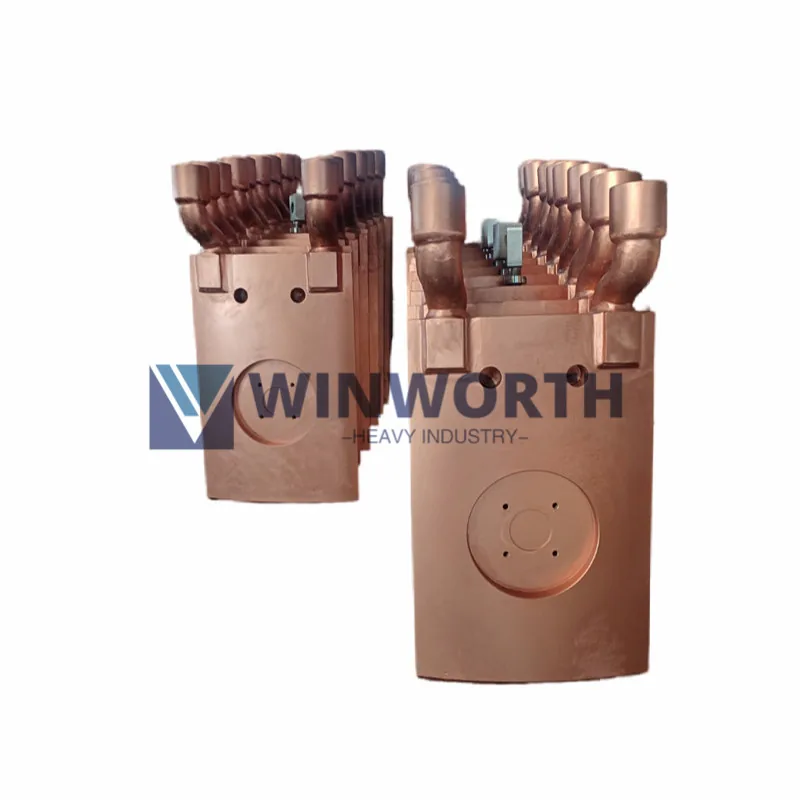
CuCrZr may be considered for drawing-based contact shoes, pressure or contact rings, electrode components, crystallization wheels, sleeves, bushings, molds, and other conductive components. The material name does not prove suitability for a specific equipment position.
Review actual interfaces, current path, cooling, contact pressure, motion, wear, joining, furnace or line duty, inspection, and maintenance before approval.