
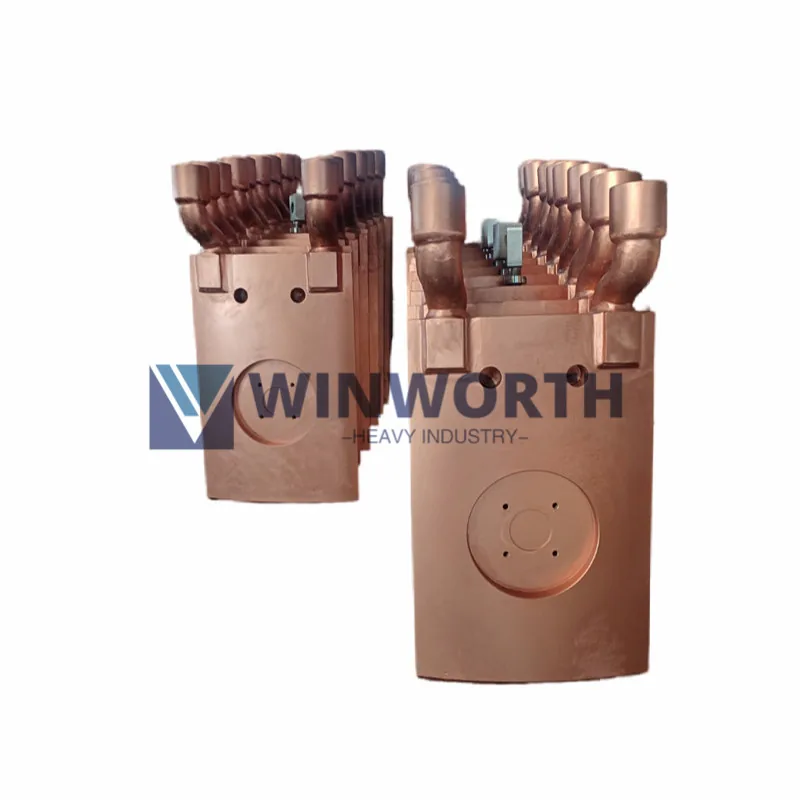
Project Basis
An anonymized ferroalloy producer required replacement copper contact shoes for an existing submerged arc furnace electrode system. The project record identifies three controlled objectives: fit the established mechanical interfaces, maintain the specified electrical-contact geometry, and create a repeatable identification and inspection basis for later orders.
This case does not disclose furnace rating, operating current, customer identity, dimensions, quantity, service history, or measured performance.
Requirement and Interface Control
The approved drawing and purchase requirements controlled the replacement:
- contact faces, mounting geometry, hole and connection locations, datums, orientation, and installation-set identity;
- areas affecting contact pressure, alignment, current transfer, cooling or adjacent parts where applicable to the approved design;
- surface condition and machining requirements at the defined electrical and mechanical interfaces;
- material designation, product form, condition, process route, tests, reports, and permitted alternatives.
The project identified CuCrZr as the selected material system. That name alone did not define the finished component. Exact designation, chemistry, product form, temper or heat-treatment condition, property requirements, sampling, test method, and acceptance range remained drawing- and order-controlled.
Manufacturing Route
The recorded route connected controlled material preparation, forging, heat treatment, and precision machining.
- Manufacturing datums were aligned with the contact and mounting features rather than selected only for machining convenience.
- Forging and heat treatment were managed as part of the specified material condition, not as generic process labels.
- Rough and final machining protected the dimensional chain between mounting and contact surfaces.
- Material identity and dimensional records remained linked to the manufacturing batch and part marking.
An ASTM copper specification applies only when its listed alloy, product form, edition, and order scope match the actual deliverable. A general forging reference does not automatically cover a CuCrZr contact shoe.
Inspection and Repeat-Supply Evidence
The inspection basis included the critical interface dimensions, contact-face condition, material records, identification, and the conductivity or other property checks specified by the approved order. Test location, method, temperature, equipment, acceptance range, and reporting basis must remain visible when a conductivity value is used.
The recorded supply outcome was a controlled replacement basis:
- parts were marked and packed by installation set;
- inspection records supported incoming verification;
- the finalized drawing reduced repeated clarification on later orders;
- changes to geometry, material condition, manufacturing route, inspection, or marking required revision control.
The case does not claim a guaranteed contact temperature, ampacity, furnace output, energy saving, service interval, or lifetime. Those outcomes depend on the complete electrode system, installation, contact force, cooling, operation, maintenance, and actual duty.