
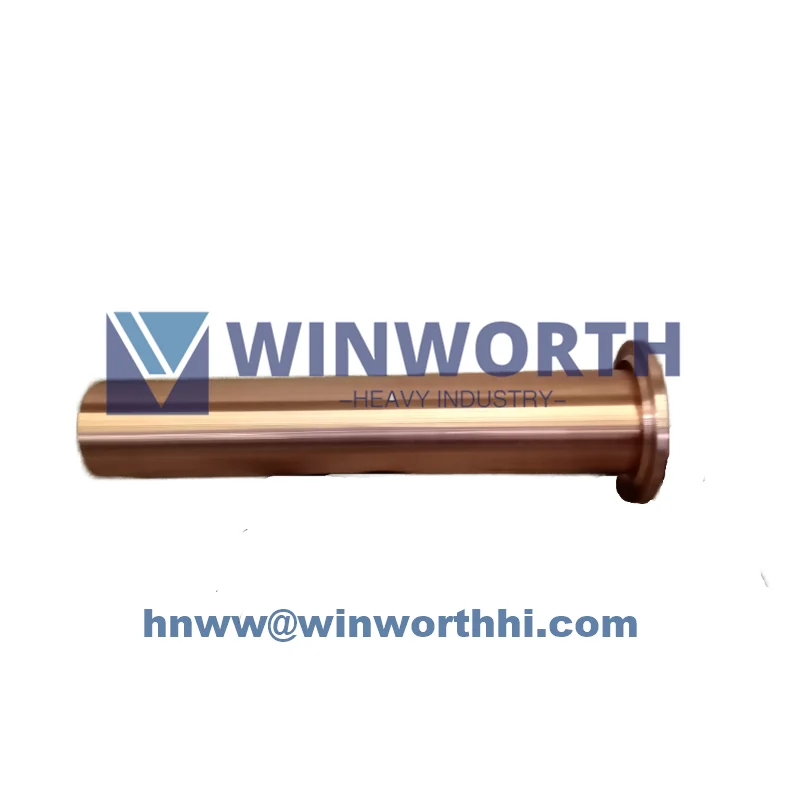
Identify the Furnace Process and Component Function First
The words crucible, mold, and crystallizer are not interchangeable product definitions. Equipment makers and plants may use different names for water-cooled copper components, but quotation and manufacture require the actual process position, function, interfaces, and controlled drawing.
This guide organizes inquiry data for vacuum arc remelting (VAR), electroslag remelting (ESR), electron-beam (EB) melting, and other documented remelting equipment. It does not select a furnace architecture or transfer complete melt-process design responsibility to the component manufacturer.
VAR Furnace Inputs
In VAR, identify the water-cooled copper mold or crystallizer in which the consumable electrode is remelted and the ingot solidifies. Provide:
- Furnace model, chamber arrangement, electrode and target ingot dimensions, withdrawal or fixed-ingot arrangement, and component orientation.
- Internal profile, working length, bottom arrangement, flange, chamber seal, mounting, alignment, and lifting interfaces.
- Cooling passage layout, connections, flow direction, buyer-provided operating limits, monitoring interfaces, and required test basis.
- Previous ingot surface, solidification, leakage, distortion, erosion, or service history relevant to the component review.
ESR Furnace Inputs
In ESR, the consumable electrode remelts through a slag pool into a water-cooled mold commonly called a mold, crystallizer, or crucible. Standard ESR should not automatically be described as a vacuum process. Provide:
- ESR variant, atmosphere or pressure arrangement where applicable, electrode and ingot dimensions, slag and process interfaces relevant to the ordered component.
- Mold profile, baseplate or bottom interface, flange, sealing, withdrawal arrangement, mounting, and surrounding equipment data.
- Cooling circuits, connections, operating inputs, inspection scope, and service observations.
EB Furnace Inputs
EB equipment may use a water-cooled copper cold hearth for melting and refining, a pour lip or transfer region, and a separate withdrawal mold or crystallizer for solidification. Do not combine them into one product name. Provide:
- Whether the inquiry covers the cold hearth, a mold or crystallizer, a crucible-like container, or another drawing-defined component.
- Melt-pool or transfer geometry, dams, lips, withdrawal opening, chamber interface, support, vacuum compatibility, and component orientation.
- Cooling circuit, connections, monitoring interfaces, joining details, cleaning requirements, and inspection records.
Common Selection Inputs
- Exact component drawing, revision, equipment position, product name used by the buyer, and photographs.
- Target ingot, melt, or component geometry; internal profile; wall and bottom geometry; flange; seals; fasteners; datums; tolerances; and surface requirements.
- Material designation, specification, product form, condition, heat treatment, conductivity or property requirements, traceability, and permitted alternatives.
- Monolithic, forged, cast, welded, drilled-channel, fabricated, or combined construction requirements.
- Quantity, previous service history, known failure modes, inspection and documentation scope, packaging, destination, and requested schedule.
Pure copper, oxygen-free copper, and CuCrZr are not automatic substitutes. The approved grade and condition depend on the design, product form, manufacture, joining, properties, service inputs, acceptance requirements, and buyer approval.
Selection Output
Before quotation, the selection output should identify one controlled component name, furnace process, function, drawing revision, material basis, cooling basis, interfaces, manufacturing scope, inspection scope, open items, and approval responsibility. If the available evidence supports more than one interpretation, Winworth will state alternatives and assumptions instead of silently selecting a design.