
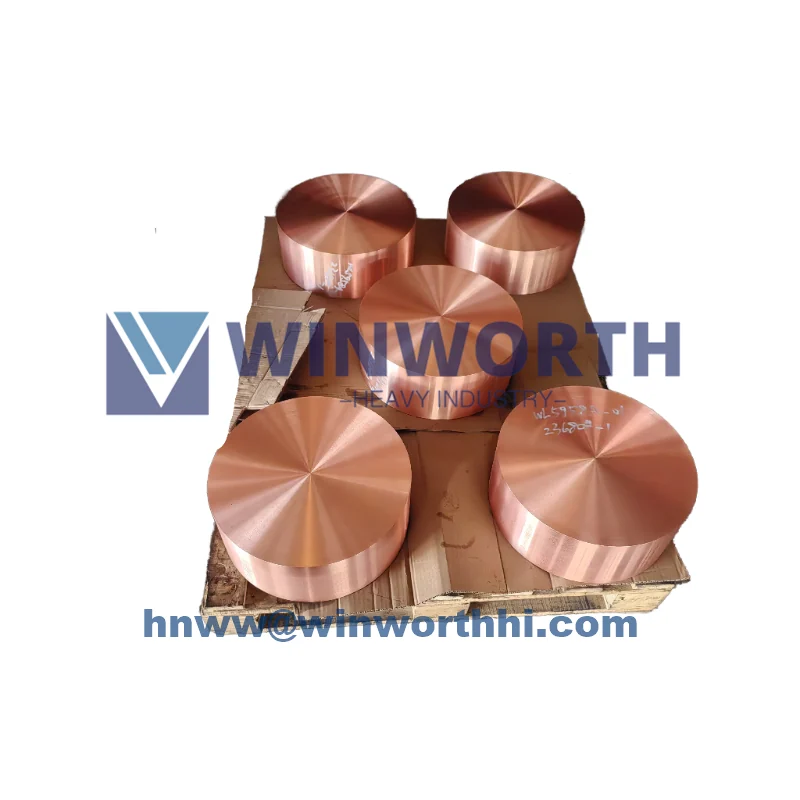
Buy the Defined Deliverable, Not the Word “Forging”
A custom copper forging should be purchased from a controlled definition that connects the finished component to the required forged blank, manufacturing sequence, inspection plan, documentation, and delivery scope.
The term forging does not tell a manufacturer whether the order is for stock, a rough forging, a proof-machined blank, a near-net shape, or a completed component. It also does not define alloy, heat treatment, properties, grain-flow intent, soundness, machining allowance, NDT, or acceptance.
1. Start with the Finished Component
- Provide the finished drawing, revision, function, equipment position, service inputs, quantity, critical interfaces, tolerances, surface requirements, and inspection needs.
- Identify the features that drive forging: section change, load path, contact or pressure area, wear, thermal exposure, electrical duty, machining envelope, or internal-quality requirement.
- Separate fixed design requirements from values open to Winworth's manufacturing proposal.
- State whether a sample, legacy drawing, or previous forging is approved design evidence or only a reference.
2. Define the Forged Blank and Supply Condition
- Required route: forging stock, open-die forging, closed-die or hot-pressed forging, rolled ring, upset shape, hollow, disc, bar, sleeve, block, or another approved route.
- Supply condition: as-forged, heat treated, cleaned, proof machined, pre-machined, or finish machined.
- Blank envelope, machining allowance, scale removal, draft, fillets, radii, straightness, flatness, concentricity, datum transfer, and traceability location.
- Tooling ownership, approval, storage, maintenance, expected life, repeat-order control, and permitted process changes.
The forging drawing and finished drawing must use a consistent dimensional chain. Excess stock can increase cost and inspection difficulty; insufficient stock can expose surface or dimensional risk.
3. Specify Material and Condition
- Exact copper or copper-alloy designation, governing standard, product form, temper or condition, and heat-treatment state.
- Chemistry, mechanical properties, conductivity, hardness, oxygen content, metallography, or other properties only when required and technically applicable.
- Test location, specimen orientation, stage, method, quantity, acceptance range, retest rule, and disposition of test material.
- Permitted material, product-form, temper, or process alternatives and the required buyer approval.
ASTM copper specifications cover different alloy lists and product forms. A standard for forging stock, a standard for hot-pressed die forgings, and a standard for castings do not define the same deliverable. Confirm the exact edition and scope in the purchase specification.
4. Connect Heat Treatment to the Manufacturing Sequence
- Define whether heat treatment is performed before or after rough machining, joining, straightening, or other operations.
- Identify section size, loading arrangement, temperature uniformity, transfer, quench, aging, distortion, cleaning, and rework controls relevant to the ordered alloy.
- State final property targets and the evidence used to verify the delivered condition.
- Require process records when they support traceability, but do not treat a furnace chart alone as proof of every final property.
5. Plan Inspection Before Finish Machining
- Material and heat traceability, surface inspection, dimensional stages, and any required UT, PT, or other NDT.
- Method suitability, procedure, calibration or reference block, coverage, sensitivity, acceptance criteria, personnel requirement, report, and witness point.
- Stage the inspection where the required volume and surfaces are accessible and the results represent the ordered condition.
- Define how identity and accepted inspection status transfer after cutting, heat treatment, or machining.
6. Compare Quotations on the Same Basis
Compare included material, forging, tooling, heat treatment, testing, machining, scrap/yield basis, first article, documentation, packing, freight responsibility, schedule assumptions, and exclusions. There is no universal MOQ or lead time for custom forgings; both depend on material route, section, tooling, process, inspection, quantity, and supply condition.