
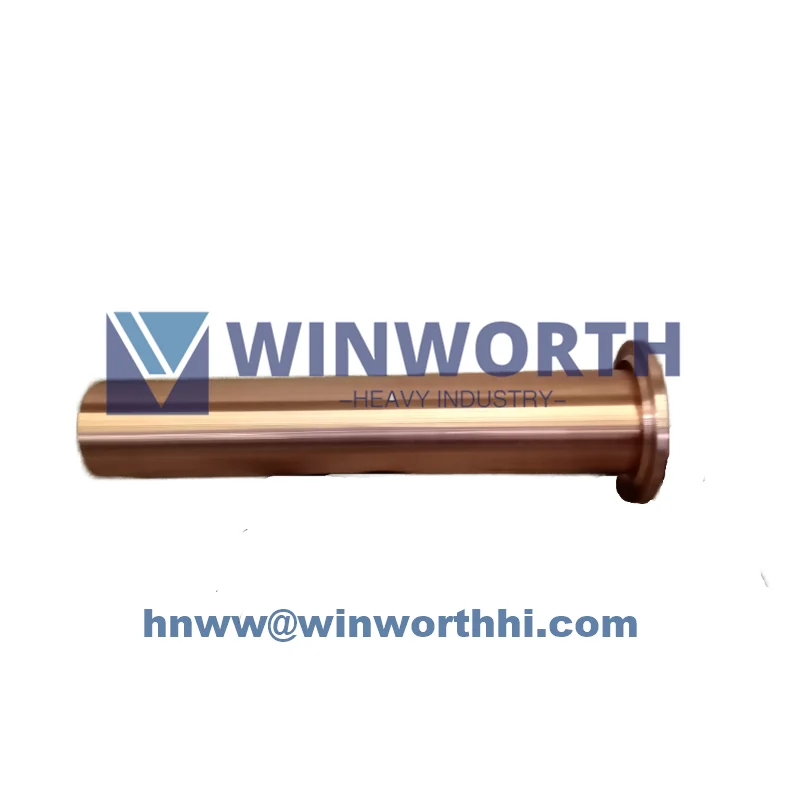
Use This Checklist After the Component Is Identified
This checklist reviews whether a drawing contains enough controlled information to quote and manufacture a water-cooled copper crucible, mold, or crystallizer. Use the Selection Guide first when the furnace process or product identity is uncertain.
A drawing review checks completeness and manufacturability. It does not approve the complete furnace, melting process, cooling-system design, pressure system, electrical system, or safety case.
1. Drawing Control and Product Identity
- Drawing number, revision, title, units, scale, approval status, referenced specifications, model files, and document precedence.
- Furnace type, equipment model, equipment tag, component function, installed orientation, and mating component references.
- Whether
crucible,mold, orcrystallizeris the buyer's controlled product name and whether any alternative name appears in legacy documents. - New design, repeat order, replacement, or reconstruction; previous revisions and approved deviations that remain applicable.
2. Geometry, Datums, and Interfaces
- Internal diameter or profile, outside geometry, working length, total length, wall and bottom geometry, transitions, radii, chamfers, and machining stock.
- Primary, secondary, and tertiary datums; critical dimensions; geometric controls; fits; concentricity or alignment requirements; and measurement access.
- Flange, bolt circle, holes, threads, sealing faces, grooves, support faces, chamber interfaces, baseplate or bottom interface, and withdrawal opening where applicable.
- Lifting points, handling orientation, installation clearance, mass, center of gravity, and areas requiring protection.
Dimensions without a usable datum system or acceptance rule do not create a complete measurement plan. Identify design information, quality directives, measurement resources, and measurement rules for critical characteristics.
3. Cooling Passages and Connections
- Passage path, cross-section, drilled or formed features, plugs, closures, partitions, circuit count, inlet, outlet, drain, vent, and flow direction.
- Minimum wall or ligament requirements only where controlled by the approved design; method for verifying inaccessible features.
- Connection type, size, standard, orientation, sealing, mating pipe envelope, and protected faces.
- Buyer-provided medium, cleanliness, flow, pressure, temperature, differential pressure, duty, monitoring, and test inputs relevant to the component.
4. Material and Manufacturing Information
- Material designation, governing specification, product form, condition, heat treatment, required properties, and permitted alternatives.
- Blank route and construction: forged, cast, machined, welded, drilled-channel, fabricated, or combined.
- Weld joint details, filler, procedure and qualification requirements, heat-treatment sequence, repair limitations, and inspection stage where applicable.
- Machining sequence constraints, surface finish, edge condition, cleaning, contamination control, and traceability.
5. Inspection, Testing, and Records
- Material evidence, chemistry or properties, traceability level, dimensional inspection, NDT, pressure or leak testing, and surface acceptance.
- For each inspection: object, area, stage, method, extent, sampling, procedure, acceptance criteria, personnel or laboratory requirement, witness point, and report.
- Test medium, pressure or vacuum, hold time, temperature, allowable leakage, drying, preservation, and post-test cleanliness.
- Required drawing-marked report points, material certificate, manufacturing record, NDT report, test record, deviation record, photographs, and final index.
Pressure or leak testing of the ordered component does not validate the complete equipment design pressure, field piping, monitoring, interlocks, installation, or operating safety.
Drawing Release Decision
Classify each review item as accepted, clarification required, open for Winworth proposal, or buyer approval required. Release the drawing for quotation or manufacture only when the governing revision, product identity, interfaces, critical characteristics, cooling basis, material, manufacturing scope, inspection, records, and approval authority are consistent.