
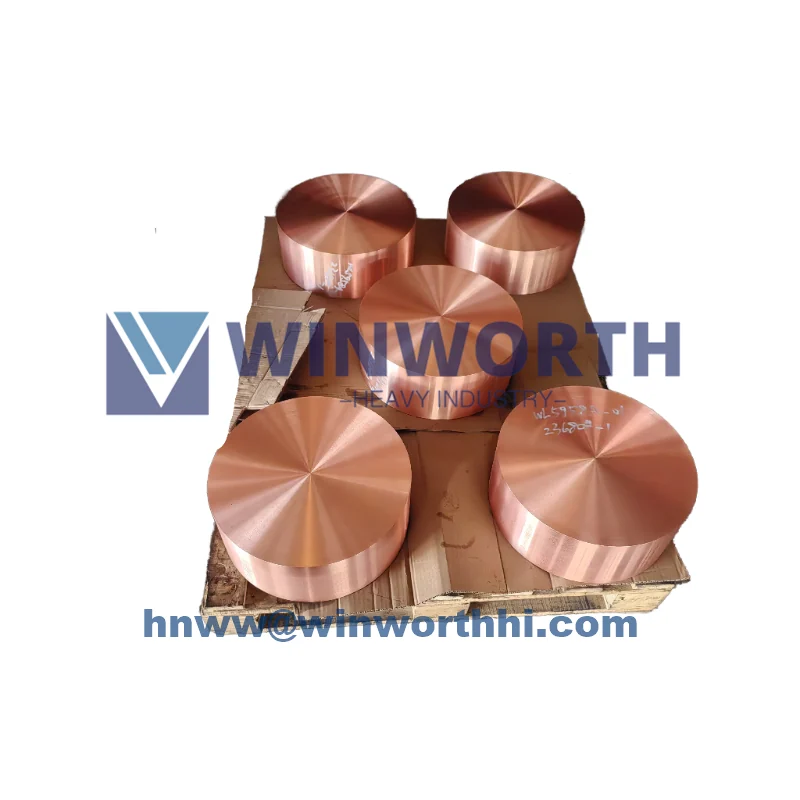
Define the Ordered Deliverable
Use this checklist for a copper or copper-alloy ring, disc, sleeve, hollow, bar, block, billet-based shape, die forging, open-die forging, or finish-machined component when forging is an approved or proposed manufacturing route.
The first RFQ decision is the supply condition. A forging stock item, rough forging, proof-machined blank, near-net shape, and finished component have different drawing, allowance, inspection, documentation, and price bases.
1. Finished Part and Forging Scope
- Finished-part drawing, revision, function, equipment position, quantity, mass, envelope, and critical interfaces.
- Required supply condition: forging stock, rough forging, heat-treated forging, proof-machined blank, pre-machined part, or complete finished component.
- Proposed forging or blank drawing, parting or forging direction where relevant, machining envelope, datum transfer, and traceability location.
- Machining allowance, scale or surface removal, draft, fillets, corner radii, flash or tooling marks, straightness, flatness, concentricity, and areas that must remain sound after finish machining.
- Tooling requirement, ownership, storage, maintenance, repeat-order use, and approval of tooling-related changes.
2. Material, Product Form, and Condition
- Exact copper or copper-alloy designation, governing material specification, required product form, delivery condition, and heat treatment.
- Required chemistry, mechanical properties, conductivity, hardness, oxygen content, grain or metallurgical requirements only where applicable to the specified material and product.
- Sampling location, sample orientation, test stage, test method, specimen disposition, retest rules, and acceptance values.
- Permitted alternatives and buyer approval process for grade, product form, heat treatment, property target, or manufacturing route changes.
ASTM B124/B124M covers specified copper and copper-alloy rod, bar, and shapes intended for hot forging, while ASTM B283/B283M covers listed copper and copper-alloy die forgings produced by hot pressing. Neither standard is a universal requirement for every copper alloy, open-die forging, custom blank, or finished component. Use only the edition and scope explicitly accepted in the purchase documents.
3. Manufacturing and Machining Route
- Starting stock or billet basis, forging method, heating controls, reduction or deformation expectations where specified, intermediate reheating, and heat-treatment sequence.
- Grain-flow, directional-property, soundness, weld-repair, surface-repair, or process restrictions only where defined by the approved requirement.
- Proof machining needed to expose surfaces for inspection, establish datums, verify stock, or remove decarburized, oxidized, contaminated, or defective surface layers where applicable.
- Finish machining, holes, threads, sealing or contact surfaces, deburring, cleaning, surface treatment, assembly, and marking included in the ordered scope.
Do not infer mechanical, electrical, wear, or service performance from the word forged alone. Performance depends on material, condition, geometry, process history, inspection, final manufacture, installation, and service.
4. Inspection and Documentation
- Heat and forging traceability; material certificate; heat-treatment record; property test report; dimensional report; and final document index.
- UT or another NDT method only when applicable to the material, geometry, stage, expected discontinuities, procedure, coverage, sensitivity, and acceptance criteria.
- Surface inspection, dimensional stage, sampling, buyer or third-party witness, hold points, deviation approval, and record language.
- Rules for removing test material, identifying tested locations, preserving traceability after cutting, and transferring identity to finished pieces.
5. Quantity, Packaging, and Commercial Basis
- Quotation and batch quantity, repeat demand, forecast, split sizes, first article or qualification piece, and acceptable over- or under-supply.
- Required date, approval timing, destination, named delivery point, requested commercial term and version, packing, preservation, handling, and storage.
- Included tooling, material, heat treatment, inspection, tests, machining, marking, packing, freight responsibility, documents, and exclusions.
- Open technical points, assumptions, alternative routes, option pricing, validity, and change-order basis.